



Integrated screw air compressor
What is 4-IN-1 Laser Compressor
The four-in-one combined screw air compressor integrates screw compressor, freeze dryer, precision filter, gas storage tank and other components, which is convenient for users to install, use and move. After the air passes through the integrated system, the quality is significantly improved, the air supply is stable, and the air source is highly pure, which can meet the process requirements of various enterprises. Specially customized for the laser cutting industry. This series of products has beautiful appearance, stable performance, and economical and affordable. It is one of our company's key export products.


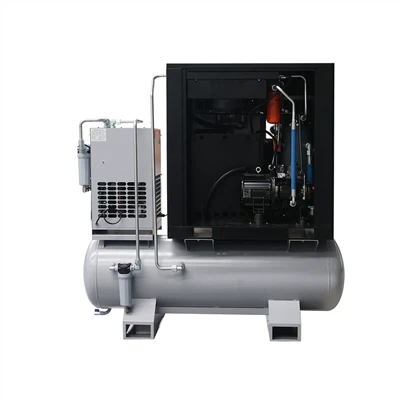


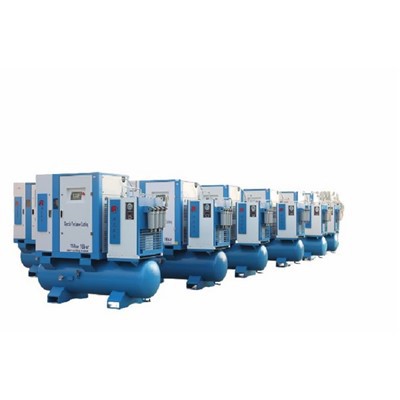
Benefits of 4-IN-1 Laser Compressor
Enhanced Performance and Versatility
Equipped with a 4-in-1 integrated air compressor, laser cutters transcend their conventional capabilities. No longer constrained by the limitations of standalone compressors, this integrated solution offers a seamless fusion of functionality. By combining the functionalities of an air compressor, dryer, filter, and tank, it optimizes space utilization while maximizing performance.
Streamlined Workflow and Efficiency
Imagine a workflow devoid of interruptions, where every operation seamlessly transitions into the next. With the 4-in-1 integrated air compressor, this vision becomes a reality. By eliminating the need for separate components and cumbersome setups, it streamlines the workflow, reducing downtime and enhancing productivity. Whether you're executing intricate designs or tackling high-volume production runs, efficiency becomes the hallmark of your operations.
Precise Air Regulation and Quality Control
In the realm of laser cutting, precision is non-negotiable. Any deviation from the desired parameters can compromise the integrity of the final product. The 4-in-1 integrated air compressor empowers you with unparalleled control over air regulation and quality. Through advanced filtration systems and precise pressure adjustments, it ensures a consistent supply of clean, dry air, thereby enhancing the precision and quality of your cuts.
Cost-Effectiveness and Space Optimization
Traditional setups often entail a significant investment in separate components, ranging from compressors to dryers and filters. Additionally, the spatial requirements for housing these individual units can pose logistical challenges, especially in constrained environments. With the 4-in-1 integrated air compressor, you not only consolidate your equipment but also minimize operational costs and space requirements. This all-in-one solution delivers exceptional performance without breaking the bank or encroaching on valuable workspace.
Application of 4-IN-1 Laser Compressor
Food and Beverage
The food and beverage industries require top-quality clean compressed air to perform a variety of functions in production. This means the usage of some of the most technologically advanced systems.Because of the risk of contamination, the food and beverage industry relies on oil free 4-IN-1 Laser Compressor with high-end ratings. 4-IN-1 Laser Compressor for the food and beverage industry require Class Zero safety ratings – the cleanest running on the market.
Manufacturing
Manufacturers vary greatly in their needs and each require the flexibility to perform their job right. Rugged and reliable air compressors are a vital part of meeting these needs. This is one of the most important compressors for industrial uses.4-IN-1 Laser Compressor for the manufacturing industry must remain high in productivity and low in downtime. Quality parts such as dryers and piping systems play a significant role in the production line as well.


Plastics
Much of the consumable world is made with plastic, and that plastic production requires compressed air usage. These plastic manufacturers have a wide variety of needs, and rely on compressor industry experts to help them build a system suited to them.Compressors help make the job of plastic production more efficient. 4-IN-1 Laser Compressor for the plastic industry need to be durable, reliable, and suited to the company's individual needs.
Pharmaceutical
Like the food and beverage industry, the pharmaceutical industry relies on clean, contaminant-free compressed air to manufacture their product. Clean, oil-free 4-IN-1 Laser Compressor become a necessary tool in meeting strict Food and Drug Administration standards for drug production.
4-IN-1 Laser Compressor Function
Increasing Gas or Air Pressure
The compressor pumps gas or air from a smaller chamber to a larger chamber, thus increasing the pressure. This function is very useful in various industries, such as the petrochemical and oil industries, where gas and air play an important role in production.
Supplying Air or Gas for Applications Requiring High Pressure
Compressors also supply air or gas for high-pressure applications, such as pumping water, cooling systems, and charging batteries in electronic equipment. Using a compressor, the air or gas pressure can be increased to the level required to ensure optimal performance in the application.
Supplying Clean Air to Building Control Systems
When air is used as the driving medium in a building control system, it is essential to ensure that the air entering the system is clean and free of contaminants.In this case, the air compressor's function is to supply clean air to the building's control system. Air compressors store air from outside before it is channeled into the building control system. So, the air in the building control system becomes cleaner and can work more effectively.
Produces Compressed Air in Large Volumes
Another function of the air compressor is to compress air or other gases into a smaller volume. Air compressors can produce compressed air that is used in a variety of tools.This is because air compressors can produce large volumes of compressed air, so they can be used for applications that require a lot of air in a short time. This allows the production process to be more efficient and effective.
What will you be using the compressor for?
Having an understanding of what you will be using your air compressor for is the most important factor when looking to buy a compressor. All compressors come with specific warranties to cover infrequent use for DIY jobs or frequent use. Make sure you choose the right compressor for your application. If you have a specific job in mind, then check out our compressor kits, which have everything you need to get started.
The CFM requirement
The CFM requirement is the single biggest consideration when buying a compressor. Knowing what CFM your air compressor needs to produce in order to power all of your air tools. Find the SCFM requirement of your tool in its manual or technical specification.
Choosing a tank size
With tank sizes ranging from 6 litres to 500 litres+, choosing the perfect capacity air tank or receiver will seriously affect the performance of your compressor. To find the minimum tank size of the compressor, you need to multiply your tool's required SCFM by 6.
Oil-less or oil-compressor
Oil-less compressors are low-maintenance and free from contaminants. A standard oiled compressor will generally produce a larger output and run quieter.
How Does an 4-IN-1 Laser Compressor Work?
Intake
To create compressed air, you need, well, air, so the first part of the compression process is air intake. During air intake, air is drawn into the compressor through an air inlet valve.The air inlet valve is often preceded by a filter, which protects the compressor by reducing the contaminants entering it.
Compression
The air then flows into the compression chamber where it is compressed.Compression is the conversion of the kinetic energy from the power source to potential energy in the form of pressurized air.We'll look more closely at how each type of compressor does this when we cover the compressor types, but two fundamental concepts apply to all compressors.
Integrated Storage
Depending on the compressor type, next the air may flow into an integral receiver tank (sometimes called a storage tank or an air tank) after being compressed.Many uses of integrated storage are tied to the compressor type and will be covered there. However, two common reasons are shared across multiple types.
Integrated Cooling
Compressing air creates heat. While the air does not have to be cooled before leaving the compressor, most three-phase electric compressors and some diesel compressors (regardless of type) come with integrated aftercoolers to lower the air temperature before discharge.Compressors with aftercoolers will also have water separators to remove the excess moisture that drops out of the air stream during cooling.
Discharge
Finally, the air flows through the discharge valve, either directly to the point-of-use (e.g., a chipping hammer on a portable diesel compressor) or to a series of dryers and filters first (e.g., for instrument air in a manufacturing plant).
How to Maintain 4-IN-1 Laser Compressor
Read The Owner's Manual
This may sound basic, but it's important to understand the manufacturer's guidelines and instructions for getting the most out of your specific air compressor model. The owner's manual is the place to turn to understand the necessary routine maintenance, and specific recommendations.
Perform Daily Visual Checks
Make sure you're looking for obvious issues like oil leaks, loose components, or unusual noises. Make sure that the operating environment is clean.
Change Air Filters
You'll need to clean and replace air filters regularly, based on the manufacturer's recommendations. A clogged or dirty filter can reduce the airflow and strain the compressor, leading to reduced efficiency and other problems.
Check Oil Levels
It's important to check oil levels regularly and keeping it within the recommended range. Make sure to change the oil based on the manufacturer's recommended schedule.
Check The Belts And Pulleys
Check and replace any worn belts and pulleys on a regular basis. It's important to maintain the proper tension to prevent slippage.
Drain The Air Tank
Draining the air tank on a regular basis removes accumulated moisture and prevents damage from rust. Ensure the compressor is turned off and depressurized before opening the drain valve.
Our Factory
Hannemec(ShanDong) Intelligent Technology Co.,Ltd. was established in 2021 and is a manufacturer specializing in the research and development, design, production, sales, and service of air compressors. Its products include permanent magnet variable frequency air compressors, two-stage permanent magnet variable frequency air compressors, laser cutting special air compressors, oil-free air compressors, mobile air compressors, low, medium, and high pressure air compressors, centrifugal air compressors, and compressed air purification equipment


FAQ