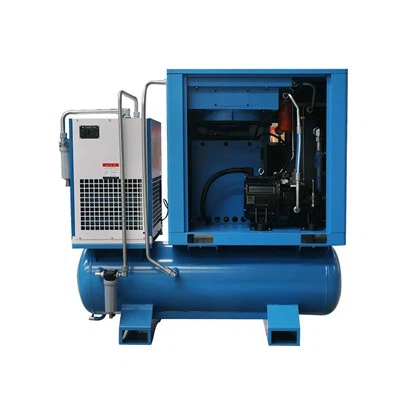
In the realm of industrial equipment, air compressors serve as crucial components across various sectors. Among them, the laser cutting screw air compressor stands out with its unique characteristics and applications, especially when compared to other types of air compressors. As a supplier of laser cutting screw air compressors, I'm well - versed in the intricacies that set this type of compressor apart from the rest. This blog post will delve into the key differences, advantages, and applications of laser cutting screw air compressors in contrast to other common air compressor types.
Basic Working Principles
To understand the differences, we first need to examine the working principles of various air compressors.
Reciprocating Air Compressors
Reciprocating air compressors are perhaps the most well - known traditional type. They operate on a piston - cylinder mechanism. The piston moves back and forth within the cylinder, creating a vacuum during the intake stroke that draws air into the cylinder. On the compression stroke, the piston compresses the air, and then it is discharged at high pressure. These compressors are often used in small - scale applications like home garages, small workshops, and for powering pneumatic tools such as nail guns and paint sprayers.
Rotary Vane Air Compressors
Rotary vane air compressors consist of a rotor with vanes that slide in and out of slots in the rotor. As the rotor spins, the vanes create separate chambers, which change in volume. Air is drawn into these chambers, compressed as the volume decreases, and then pumped out. They are typically used in continuous - duty applications where a moderate amount of compressed air is required, such as in dental offices and light manufacturing.
Laser Cutting Screw Air Compressors
Laser cutting screw air compressors use two interlocking helical screws, known as rotors. The rotors rotate in opposite directions, trapping air between the lobes of the screws and the compressor housing. As the screws turn, the volume of the trapped air decreases, compressing it. This compression process is continuous, which is ideal for applications that require a large and consistent supply of compressed air, such as laser cutting processes.
Performance Metrics
Flow and Pressure
When it comes to flow rate, laser cutting screw air compressors can typically provide a higher and more stable flow compared to reciprocating compressors. Reciprocating compressors deliver air in pulses due to the piston - driven nature of their operation. Rotary vane compressors also have limitations in terms of maximum flow rate compared to screw compressors.
In terms of pressure, laser cutting applications usually demand a relatively high and stable pressure. Laser cutting screw air compressors can easily achieve the required pressure levels and maintain them consistently. Reciprocating compressors may struggle to maintain a steady pressure during continuous operation, and rotary vane compressors may not be suitable for extremely high - pressure applications.
Energy Efficiency
Energy efficiency is a critical factor in industrial operations. Laser cutting screw air compressors are generally more energy - efficient than reciprocating compressors. The continuous compression process in screw compressors reduces energy losses associated with the start - stop nature of reciprocating compressors. Rotary vane compressors can also be energy - efficient, but screw compressors often have an edge, especially when operating at full load over long periods. For example, modern High - efficiency Screw Air Compressor models are designed with advanced technologies to minimize energy consumption while maximizing output.
Noise Level
Noise is another important consideration, especially in work environments where operators are present. Reciprocating air compressors are known for being quite noisy due to the piston movement and the associated mechanical vibrations. Rotary vane compressors are generally quieter than reciprocating compressors, but laser cutting screw air compressors take it a step further. Many screw compressors are equipped with noise - reducing enclosures and advanced design features that significantly reduce the noise level. This makes them more suitable for industrial settings where a quieter working environment is desired.
Application - Specific Features
Purity of Compressed Air
Laser cutting processes require clean and dry compressed air. Any contaminants in the air can affect the quality of the laser cut, causing issues such as rough edges or incomplete cuts. Laser cutting screw air compressors are often equipped with advanced air filtration and drying systems. These systems can remove moisture, oil, and other impurities from the compressed air, ensuring a high - quality output. In comparison, reciprocating compressors may introduce more oil and moisture into the compressed air due to the piston - cylinder design, and rotary vane compressors may also have limitations in terms of air purity.
Adaptability to Laser Cutting Machines
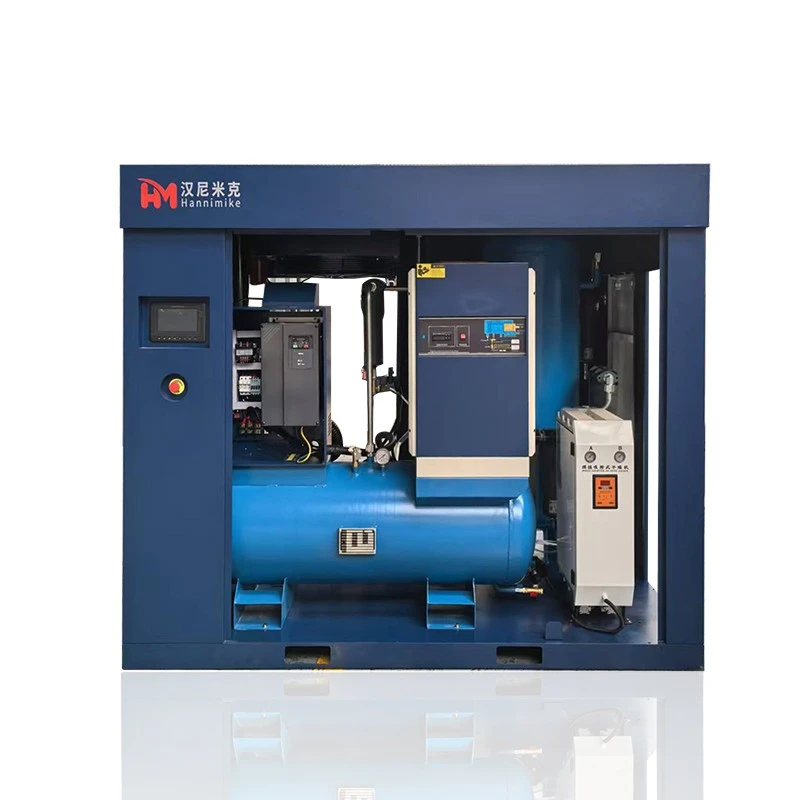
Skid - mounted Screw Air Compressor for Laser are specifically designed to be compatible with laser cutting machines. They can be easily integrated into the laser cutting system, providing a seamless supply of compressed air. The screw compressors can be adjusted to meet the specific air requirements of different laser cutting machines, whether it's a small - scale desktop laser cutter or a large - scale industrial laser cutting system. Reciprocating and rotary vane compressors may not have the same level of adaptability and may require additional equipment or modifications to work effectively with laser cutting machines.
Maintenance Requirements
Ease of Maintenance
Laser cutting screw air compressors generally have a simpler maintenance process compared to reciprocating compressors. Reciprocating compressors have many moving parts, such as pistons, connecting rods, and valves, which require regular lubrication and inspection. These parts are also more prone to wear and tear, leading to more frequent maintenance intervals. Rotary vane compressors have fewer moving parts than reciprocating compressors but still require regular maintenance of the vanes and seals. Screw compressors have relatively fewer wearing parts, which reduces the overall maintenance workload.
Service Life
The service life of a laser cutting screw air compressor is typically longer than that of reciprocating and some rotary vane compressors. The continuous and smooth operation of screw compressors reduces stress on the components, resulting in less wear and tear over time. With proper maintenance, a laser cutting screw air compressor can serve for many years, providing a reliable source of compressed air for laser cutting operations.

Cost Considerations
Initial Investment
The initial cost of a laser cutting screw air compressor is usually higher than that of a reciprocating air compressor. This is due to the advanced technology, precision engineering, and additional features such as air filtration and drying systems. Rotary vane compressors may have a cost similar to or slightly higher than reciprocating compressors, but still lower than screw compressors in many cases. However, when considering the long - term benefits of energy efficiency, lower maintenance costs, and higher performance, the higher initial investment in a screw compressor can often be justified.
Operational Costs
In the long run, laser cutting screw air compressors can result in lower operational costs. Their energy efficiency reduces electricity consumption, and the lower maintenance requirements mean less spending on parts and labor. Reciprocating compressors may have higher energy consumption and more frequent maintenance needs, which can add up to significant operational costs over time.
Conclusion
In conclusion, laser cutting screw air compressors offer a range of advantages over other types of air compressors, especially in the context of laser cutting applications. Their high - flow, stable pressure, energy efficiency, low noise level, air purity, and adaptability make them the preferred choice for laser cutting operations. As a supplier of laser cutting screw air compressors, we are committed to providing high - quality products that meet the specific needs of our customers.
If you're in the market for a reliable air compressor for your laser cutting equipment, we encourage you to explore our Box screw air compressor options. We understand that each customer has unique requirements, and we're here to help you find the perfect solution. Whether you need a high - efficiency screw air compressor or a skid - mounted screw air compressor for your laser cutting system, our team of experts can provide you with the best advice and support. Contact us today to start a discussion about your procurement needs, and let's work together to achieve optimal results for your laser cutting operations.
References
- ASME (American Society of Mechanical Engineers) Boiler and Pressure Vessel Code.
- Compressed Air and Gas Institute (CAGI) standards and guidelines.
- Manufacturer's technical manuals for various air compressor types.