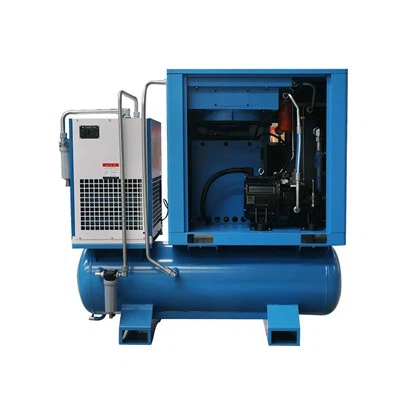
As a supplier of Compressed Air Modular Adsorption Dryers, I've encountered numerous challenges and inquiries from clients, especially those operating in high - temperature environments. In this blog, I'll share some effective strategies to enhance the performance of these dryers under such demanding conditions.
Understanding the Impact of High - Temperature Environments on Compressed Air Modular Adsorption Dryers
Before delving into the solutions, it's crucial to understand how high temperatures affect the operation of Compressed Air Modular Adsorption Dryers. The basic principle of these dryers is to remove moisture from compressed air through adsorption. Adsorbents like activated alumina or silica gel are used to trap water vapor.
In high - temperature settings, the adsorption capacity of these adsorbents decreases significantly. The equilibrium between the adsorbent and the water vapor in the air is shifted, making it more difficult for the adsorbent to hold onto the moisture. Additionally, high temperatures can increase the regeneration energy requirements. During the regeneration phase, more heat is needed to drive off the adsorbed moisture from the adsorbent, which can lead to higher energy consumption and potentially reduced drying efficiency.
Strategies to Improve Performance in High - Temperature Environments
1. Pre - Cooling of Compressed Air
One of the most effective ways to counter the negative effects of high temperatures is to pre - cool the compressed air before it enters the Modular Adsorption Dryer. By reducing the temperature of the incoming air, the adsorption capacity of the adsorbent can be maintained at a more optimal level.
A refrigerated pre - cooler can be installed upstream of the adsorption dryer. This device uses a refrigeration cycle to lower the temperature of the compressed air, causing a significant amount of water vapor to condense out. The condensed water can then be removed through a separator, reducing the moisture load on the adsorption dryer.
For example, if the incoming compressed air temperature is 40°C, pre - cooling it to 20°C can drastically improve the drying efficiency of the adsorption dryer. The cooler air allows the adsorbent to adsorb more moisture, resulting in lower dew points in the dried air.
2. Optimizing Regeneration Process
In high - temperature environments, the regeneration process of the adsorption dryer needs to be carefully optimized. There are two main types of regeneration methods: heat - less regeneration and heated regeneration.
Heat - less Regeneration
In heat - less regeneration dryers, a portion of the dried air is used to purge the saturated adsorbent bed. In high - temperature conditions, the purge air flow rate may need to be increased. This ensures that more moisture is removed from the adsorbent during the regeneration phase. However, increasing the purge air flow rate also means more compressed air is wasted. To balance the trade - off between drying efficiency and air loss, careful monitoring and adjustment of the purge air flow rate are necessary.
Heated Regeneration
Heated regeneration dryers use an external heat source to heat the purge air. In high - temperature environments, the heating temperature can be adjusted based on the inlet air temperature and the moisture content. Higher heating temperatures can help to more effectively desorb the moisture from the adsorbent. However, it's important to ensure that the adsorbent is not over - heated, as this can damage the adsorbent and reduce its lifespan.
3. Selecting the Right Adsorbent
The choice of adsorbent plays a vital role in the performance of the adsorption dryer in high - temperature environments. Some adsorbents are more suitable for high - temperature applications than others.
For instance, activated alumina has good thermal stability and can maintain its adsorption capacity at relatively high temperatures. It also has a high affinity for water vapor, making it an excellent choice for high - temperature compressed air drying. Silica gel, on the other hand, may be less suitable for extremely high - temperature environments as its adsorption capacity drops more rapidly with increasing temperature.
4. Regular Maintenance and Monitoring
Regular maintenance and monitoring are essential for ensuring the optimal performance of Compressed Air Modular Adsorption Dryers in high - temperature environments.


Maintenance
The dryer components such as filters, valves, and heat exchangers should be inspected and cleaned regularly. Filters can become clogged with dust and debris, especially in high - temperature industrial environments. A clogged filter can restrict the air flow and reduce the drying efficiency. Valves need to be checked for proper operation to ensure that the regeneration and drying cycles are functioning correctly.
Monitoring
Continuous monitoring of key parameters such as inlet and outlet air temperatures, pressure, and dew point is crucial. By analyzing these data, any potential issues can be detected early, and appropriate adjustments can be made. For example, if the dew point of the dried air starts to increase, it may indicate a problem with the adsorption process, such as a saturated adsorbent or a malfunctioning valve.
The Importance of System Design
The overall system design of the compressed air drying system also has a significant impact on the performance of the adsorption dryer in high - temperature environments.
1. Adequate Sizing
The adsorption dryer should be properly sized for the specific application. In high - temperature environments, the dryer may need to be oversized to account for the reduced adsorption capacity of the adsorbent. An undersized dryer will struggle to achieve the desired dew point, leading to poor air quality and potential damage to downstream equipment.
2. Layout and Installation
The layout and installation of the dryer and its associated components are also important. The dryer should be installed in a well - ventilated area to prevent heat buildup. The piping should be properly insulated to minimize heat transfer and ensure that the compressed air temperature remains as stable as possible throughout the system.
Conclusion
Improving the performance of Compressed Air Modular Adsorption Dryers in high - temperature environments requires a comprehensive approach. By pre - cooling the compressed air, optimizing the regeneration process, selecting the right adsorbent, and ensuring regular maintenance and monitoring, the drying efficiency can be significantly enhanced. Additionally, proper system design is crucial for long - term reliable operation.
If you're facing challenges with your compressed air drying system in a high - temperature environment, or if you're looking to upgrade your existing equipment, I encourage you to reach out for a detailed discussion. Our team of experts is ready to assist you in finding the best solutions tailored to your specific needs. Let's work together to ensure that your compressed air system operates at its peak performance.
References
- ASHRAE Handbook - HVAC Systems and Equipment. American Society of Heating, Refrigerating and Air - Conditioning Engineers.
- Compressed Air and Gas Handbook. Ingersoll Rand.
- Adsorption Technology for Gas and Liquid Drying. Various industry research papers on adsorption processes.