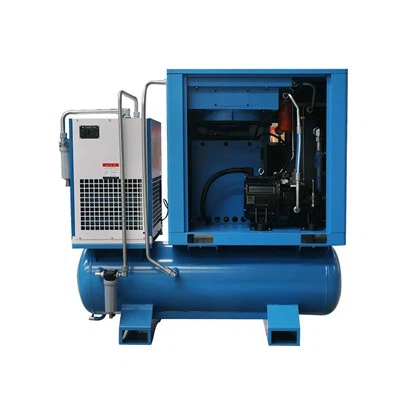
As a trusted supplier of high-quality air dryers for compressors, I understand the importance of using the right materials to ensure optimal performance, durability, and energy efficiency. In this blog post, I will delve into the key materials commonly used in high-quality air dryers for compressors, explaining their functions and benefits.
1. Heat Exchangers: Aluminum and Copper
Heat exchangers play a crucial role in air dryers by facilitating the transfer of heat between the incoming and outgoing compressed air streams. This process helps to cool the air, causing water vapor to condense and separate from the air. Two of the most commonly used materials for heat exchangers are aluminum and copper.
Aluminum
Aluminum is a popular choice for heat exchangers due to its excellent thermal conductivity, lightweight nature, and corrosion resistance. Its high thermal conductivity allows for efficient heat transfer, enabling the air dryer to cool the compressed air quickly and effectively. Additionally, aluminum is relatively inexpensive and easy to work with, making it a cost-effective option for manufacturers.
One of the main advantages of using aluminum heat exchangers is their resistance to corrosion. Compressed air often contains moisture and other contaminants that can cause corrosion over time. Aluminum's natural oxide layer provides a protective barrier against corrosion, ensuring the longevity and reliability of the heat exchanger.
Copper
Copper is another material commonly used in heat exchangers, particularly in high-performance air dryers. Copper has even higher thermal conductivity than aluminum, which means it can transfer heat more efficiently. This results in faster cooling of the compressed air and better overall performance of the air dryer.
In addition to its excellent thermal properties, copper is also highly resistant to corrosion. It forms a thin layer of copper oxide on its surface, which acts as a protective barrier against rust and other forms of corrosion. Copper heat exchangers are also known for their durability and long service life, making them a popular choice for industrial applications.
2. Refrigerant Systems: Steel and Copper
Refrigerant systems are an integral part of refrigerated air dryers, which are widely used to remove moisture from compressed air. These systems typically consist of a compressor, condenser, evaporator, and expansion valve, all of which are connected by refrigerant lines. The two main materials used in refrigerant systems are steel and copper.
Steel
Steel is commonly used in the construction of refrigerant compressors and condenser coils. Compressors are responsible for compressing the refrigerant gas, increasing its pressure and temperature. Steel is a strong and durable material that can withstand the high pressures and temperatures generated by the compressor. It also provides excellent structural support, ensuring the stability and reliability of the compressor.
Condenser coils are used to transfer heat from the refrigerant gas to the surrounding air. Steel condenser coils are often coated with a protective layer to prevent corrosion and improve their heat transfer efficiency. The use of steel in condenser coils helps to ensure the efficient operation of the refrigerant system and the overall performance of the air dryer.
Copper
Copper is the preferred material for refrigerant lines and evaporator coils. Refrigerant lines are used to transport the refrigerant between the different components of the refrigerant system. Copper's high thermal conductivity and flexibility make it an ideal choice for refrigerant lines, as it allows for efficient heat transfer and easy installation.
Evaporator coils are responsible for cooling the compressed air and causing the water vapor to condense. Copper evaporator coils have excellent heat transfer properties, which enable them to cool the air quickly and effectively. They are also resistant to corrosion, ensuring the longevity and reliability of the evaporator.


3. Adsorbent Materials: Silica Gel, Activated Alumina, and Molecular Sieves
Desiccant air dryers use adsorbent materials to remove moisture from compressed air. These materials have a high affinity for water vapor and can adsorb large amounts of moisture from the air. The three main types of adsorbent materials used in desiccant air dryers are silica gel, activated alumina, and molecular sieves.
Silica Gel
Silica gel is a porous, granular material made from silicon dioxide. It has a high surface area and can adsorb up to 40% of its weight in water vapor. Silica gel is commonly used in small to medium-sized desiccant air dryers due to its low cost and good adsorption capacity.
One of the advantages of using silica gel is its ability to indicate when it is saturated with moisture. Silica gel is often impregnated with a moisture indicator, such as cobalt chloride, which changes color from blue to pink when it is saturated. This makes it easy to monitor the moisture level in the desiccant and determine when it needs to be replaced.
Activated Alumina
Activated alumina is a porous, granular material made from aluminum oxide. It has a high surface area and can adsorb up to 20% of its weight in water vapor. Activated alumina is commonly used in larger desiccant air dryers and industrial applications due to its high adsorption capacity and durability.
Activated alumina has a higher adsorption capacity than silica gel at low relative humidity levels, making it more effective in removing moisture from dry air. It is also more resistant to abrasion and thermal shock, which makes it suitable for use in high-temperature and high-pressure applications.
Molecular Sieves
Molecular sieves are a type of synthetic zeolite that have a highly ordered pore structure. They can selectively adsorb water vapor and other small molecules based on their size and shape. Molecular sieves are commonly used in high-performance desiccant air dryers and applications where very low dew points are required.
One of the main advantages of using molecular sieves is their ability to achieve extremely low dew points. They can remove moisture from compressed air to a dew point of -40°C or lower, making them ideal for applications where moisture-sensitive equipment or processes are involved. Molecular sieves are also highly resistant to chemical attack and can be regenerated multiple times, making them a cost-effective option in the long run.
4. Enclosures and Structural Components: Steel and Stainless Steel
The enclosures and structural components of air dryers are responsible for protecting the internal components and providing support for the overall structure. Two of the most commonly used materials for enclosures and structural components are steel and stainless steel.
Steel
Steel is a strong and durable material that is commonly used in the construction of air dryer enclosures and frames. It provides excellent structural support and can withstand the rigors of industrial environments. Steel enclosures are often coated with a protective layer, such as powder coating or galvanization, to prevent corrosion and improve their appearance.
Stainless Steel
Stainless steel is a corrosion-resistant alloy that is commonly used in applications where hygiene and durability are important. Stainless steel enclosures are often used in food and beverage processing, pharmaceutical manufacturing, and other industries where strict hygiene standards must be met.
Stainless steel has a high resistance to rust and corrosion, making it suitable for use in wet or humid environments. It is also easy to clean and maintain, which helps to ensure the long-term performance and reliability of the air dryer.
Conclusion
In conclusion, the materials used in high-quality air dryers for compressors play a crucial role in determining their performance, durability, and energy efficiency. By using the right materials, such as aluminum, copper, steel, stainless steel, silica gel, activated alumina, and molecular sieves, manufacturers can ensure that their air dryers meet the highest standards of quality and reliability.
As a supplier of High Quality Air Dryer for Compressor, we are committed to using only the best materials in our products. Our Energy Efficient Compressed Air Dryers are designed to provide reliable and cost-effective solutions for a wide range of industrial applications. We also offer Industrial Air Dryer For Compressor that are specifically designed to meet the demanding requirements of industrial environments.
If you are interested in learning more about our high-quality air dryers for compressors or would like to discuss your specific requirements, please feel free to contact us. Our team of experts will be happy to assist you in finding the right solution for your needs.
References
- ASHRAE Handbook - Refrigeration. American Society of Heating, Refrigerating and Air-Conditioning Engineers.
- Compressed Air and Gas Handbook. Ingersoll Rand.
- Industrial Refrigeration Handbook. CRC Press.