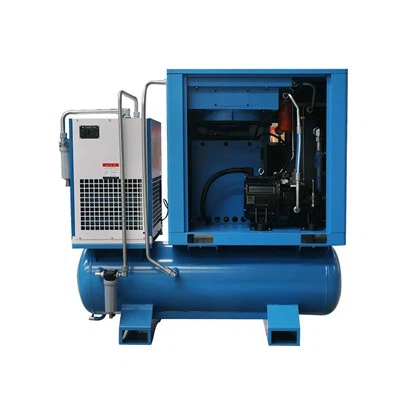
Hey there! As a supplier of Modular Adsorption Dryers, I often get asked about the difference between single - tower and twin - tower modular adsorption dryers. So, I thought I'd write this blog to break it all down for you.
Let's start with the basics. A modular adsorption dryer is a crucial piece of equipment when it comes to getting high - quality compressed air. You can check out more about Modular Adsorption Dryer on our website. These dryers work by removing moisture from compressed air, which is super important because wet compressed air can cause all sorts of problems like corrosion in pipes, damage to pneumatic tools, and even affect the quality of products in manufacturing processes.
Single - Tower Modular Adsorption Dryer
A single - tower modular adsorption dryer is, well, exactly what it sounds like. It has just one drying tower filled with an adsorbent material, usually something like activated alumina or silica gel. When compressed air enters the tower, the adsorbent grabs onto the water molecules in the air, drying it out.
One of the biggest advantages of a single - tower dryer is its simplicity. It's easy to install and doesn't require a whole lot of maintenance. If you're on a tight budget or have a small - scale operation where you don't need a constant supply of extremely dry air, a single - tower dryer might be the way to go.
However, single - tower dryers do have their limitations. Since there's only one tower, when the adsorbent in that tower gets saturated with water, the dryer has to be taken offline for regeneration. Regeneration is the process of removing the water from the adsorbent so it can start drying air again. During this regeneration period, you won't be able to get dry compressed air from the dryer. This can be a real pain if you need a continuous supply of dry air for your operations.
Another drawback is that single - tower dryers usually can't achieve as low a dew point as twin - tower dryers. Dew point is a measure of how much moisture is in the air. A lower dew point means drier air. In many industrial applications, a really low dew point is necessary to prevent any moisture - related issues.
Twin - Tower Modular Adsorption Dryer
Now, let's talk about twin - tower modular adsorption dryers. These bad boys have two drying towers. While one tower is drying the compressed air, the other one is going through the regeneration process. This means that you can have a continuous supply of dry compressed air without any interruptions.
The twin - tower design allows for a more efficient and consistent drying process. You can maintain a lower and more stable dew point, which is great for industries that require high - quality, dry compressed air. For example, in the food and beverage industry, where any moisture in the compressed air could contaminate the products, a twin - tower dryer is a must.
When it comes to regeneration, twin - tower dryers offer different methods. There are heatless regeneration dryers, which use a small portion of the dried compressed air to purge the water from the adsorbent in the off - line tower. Then there are heated regeneration dryers, which use an external heat source to speed up the regeneration process. This can be more energy - efficient in some cases, especially if you have a large - scale operation.
But, of course, twin - tower dryers aren't all sunshine and rainbows. They are more complex and expensive than single - tower dryers. The installation process might be a bit more involved, and you'll need to do more maintenance to keep both towers in good working condition.
Comparison in Different Aspects
1. Performance
In terms of performance, twin - tower dryers clearly have the upper hand. They can provide a continuous supply of dry air with a lower and more stable dew point. Single - tower dryers, on the other hand, have to be taken offline for regeneration, which can disrupt your operations and may not be able to achieve the same low dew points.
2. Cost
Single - tower dryers are generally cheaper to buy and install. They also require less maintenance, which can save you money in the long run. However, if your operation can't afford any downtime due to regeneration, the cost of lost production with a single - tower dryer might outweigh the initial savings. Twin - tower dryers are more expensive upfront, but they can be a better investment for larger operations that need a continuous supply of dry air.
3. Energy Consumption
Heatless twin - tower dryers use a portion of the dried compressed air for regeneration, which means they waste some energy. Heated twin - tower dryers can be more energy - efficient, but they require an external heat source. Single - tower dryers usually don't have the same energy - related complexities, but they can't operate continuously, which might lead to inefficiencies in your overall system.
4. Space Requirements
Single - tower dryers are more compact and take up less space. If you have limited floor space in your facility, a single - tower dryer might be a better fit. Twin - tower dryers are larger because they have two towers, so you'll need to make sure you have enough room to install them.
Which One Should You Choose?
The choice between a single - tower and a twin - tower modular adsorption dryer depends on your specific needs. If you have a small - scale operation, a tight budget, and can tolerate some downtime for regeneration, a single - tower dryer might be the right choice for you. You can learn more about Compressed Air Modular Adsorption Dryers to see if a single - tower option suits your requirements.
On the other hand, if you need a continuous supply of high - quality, dry compressed air, especially for industries like electronics, pharmaceuticals, or food and beverage, a twin - tower dryer is the way to go. It might cost more upfront, but it can save you a lot of headaches in the long run.
Conclusion
In conclusion, both single - tower and twin - tower modular adsorption dryers have their pros and cons. As a supplier, I'm here to help you figure out which one is the best fit for your operation. If you're still not sure or have any questions about our modular adsorption dryers, don't hesitate to reach out. We can have a chat about your specific needs and come up with the perfect solution for you. Whether it's a single - tower or a twin - tower dryer, we've got you covered.


If you're interested in purchasing a modular adsorption dryer or want to discuss your options further, just get in touch with us. We're always happy to have a conversation and help you make the right decision for your business.
References
- Compressed Air and Gas Handbook, Industrial Press Inc.
- Handbook of Pneumatic Conveying Engineering, William C. Mills.