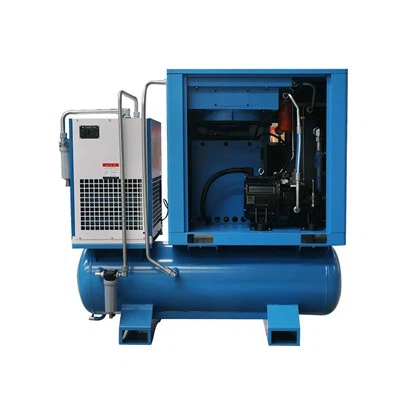
Hey there! As a supplier of high precision filters for air compressors, I often get asked about the difference between high precision filters and standard filters. So, I thought I'd take a moment to break it down for you.
First off, let's talk about what an air compressor filter does. Its main job is to remove contaminants from the compressed air. These contaminants can include dust, dirt, oil, and water vapor, which can cause damage to pneumatic tools, machinery, and even affect the quality of the end product in industrial processes.
Standard Filters for Air Compressors
Standard filters are the most common type you'll come across. They're designed to provide basic filtration and are suitable for many general applications.
Filtration Efficiency
Standard filters typically have a filtration rating in the range of 1 - 5 microns. This means they can effectively capture particles that are 1 to 5 microns in size. For reference, a human hair is about 70 - 100 microns in diameter. So, they're pretty good at catching the larger particles floating around in the air.
Cost
One of the biggest advantages of standard filters is their cost. They're generally more affordable than high precision filters. This makes them a popular choice for businesses on a budget or for applications where the level of air purity isn't extremely critical.
Durability
Standard filters are built to last under normal operating conditions. They can handle a decent amount of dirt and debris before they need to be replaced. However, if they're exposed to a high volume of contaminants or harsh environments, their lifespan may be reduced.
High Precision Filters for Air Compressors
Now, let's move on to high precision filters. These are the heavy - hitters when it comes to air purification.
Filtration Efficiency
High precision filters are capable of filtering particles as small as 0.01 microns. That's incredibly small! They can remove even the tiniest dust particles, bacteria, and sub - micron oil aerosols from the compressed air. This level of filtration is essential in industries where air quality is of the utmost importance, such as the pharmaceutical, food and beverage, and electronics manufacturing industries.
Cost
As you might expect, the higher level of filtration comes at a price. High precision filters are more expensive than standard filters. But when you consider the potential damage that can be caused by contaminated air in sensitive applications, the investment is often worth it.
Maintenance
High precision filters require more frequent maintenance. Since they're capturing such small particles, they can get clogged up faster. Regular replacement of filter elements is necessary to ensure they continue to operate at peak efficiency.
Performance Comparison
Let's look at how these two types of filters perform in different aspects.
Air Quality
The most obvious difference is in the quality of the filtered air. Standard filters can provide clean air for general use, but high precision filters can achieve near - sterile air quality. In a pharmaceutical manufacturing plant, for example, high precision filters are crucial to prevent any contamination of the drugs being produced.
Equipment Protection
Both types of filters help protect air - powered equipment. However, high precision filters offer better protection, especially for high - tech and sensitive machinery. The tiny particles that standard filters might miss can cause wear and tear on equipment over time, leading to costly repairs and downtime. High precision filters can significantly extend the lifespan of your equipment.
Energy Efficiency
A clogged filter can cause the air compressor to work harder, which in turn uses more energy. Since high precision filters need more frequent replacement, they're less likely to get severely clogged. This can lead to better energy efficiency in the long run, despite the higher initial cost.


Applications
Standard Filter Applications
- General manufacturing: In factories where the air quality requirements aren't extremely strict, standard filters are sufficient. For example, in a metal fabrication shop, standard filters can protect the pneumatic tools from large dust particles.
- Construction sites: Construction environments are full of dust and debris. Standard filters can keep the air compressor and its associated tools running smoothly.
High Precision Filter Applications
- Pharmaceutical industry: As mentioned earlier, high precision filters are essential for maintaining a sterile environment during drug production.
- Food and beverage industry: To prevent contamination of food products, high precision filters are used to ensure the compressed air used in the production process is clean.
- Electronics manufacturing: In the production of microchips and other electronic components, even the smallest particle can cause a defect. High precision filters are a must - have.
Where to Find High - Quality Filters
If you're in the market for high - quality filters, you might want to check out our Fine Filter for Screw Air Compressor, Fine Filter for Screw Compressor, and Air Compressor Fine Filter. These filters are designed to meet the highest standards of filtration and are suitable for a wide range of applications.
Conclusion
In conclusion, the choice between a high precision filter and a standard filter for air compressors depends on your specific needs. If you're working in a general application and on a budget, a standard filter might be the way to go. But if you're in an industry where air quality is critical, investing in a high precision filter is a smart move.
If you're interested in learning more about our high precision filters or have any questions about which filter is right for your application, don't hesitate to reach out. We're here to help you make the best decision for your business. Let's start a conversation about your air compressor filtration needs and see how we can work together to improve your operations.
References
- Compressed Air and Gas Handbook, 4th Edition
- Industrial Filtration Handbook