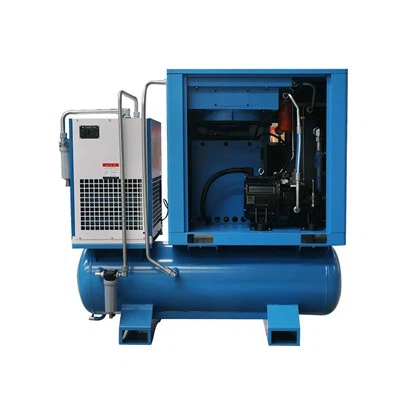
When it comes to the efficient operation of laser cutting machines, an integrated air compressor plays a pivotal role. As a trusted supplier of integrated air compressors for laser cutting, I understand the importance of proper storage when these machines are not in use. This blog post aims to provide you with comprehensive guidance on how to store an integrated air compressor for laser cutting to ensure its longevity and optimal performance.
1. Clean the Compressor Thoroughly
Before storing the integrated air compressor, it is crucial to clean it thoroughly. Start by turning off the compressor and disconnecting it from the power source. Use a clean, dry cloth to wipe down the exterior of the compressor, removing any dust, dirt, or debris. Pay special attention to the intake and exhaust vents, as these areas can accumulate a significant amount of dirt over time.
For the internal components, follow the manufacturer's instructions for cleaning. Some compressors may require the use of a specific cleaning solution or tool. In general, you can use compressed air to blow out any dust or debris from the internal components. Make sure to clean the air filter as well, as a dirty filter can reduce the efficiency of the compressor and cause premature wear and tear.
2. Drain the Moisture
Moisture is one of the biggest enemies of an air compressor. When the compressor is not in use, moisture can accumulate in the tank and other components, leading to rust and corrosion. To prevent this, you need to drain the moisture from the compressor before storing it.
Locate the drain valve on the bottom of the air tank. Open the valve and allow all the moisture to drain out. You may need to wait a few minutes for all the moisture to drain completely. Once the moisture has been drained, close the drain valve tightly.
In addition to draining the moisture from the tank, you also need to drain the moisture from the air lines and other components. Use a moisture trap or a drain valve to remove any moisture from the air lines. Make sure to drain the moisture from all the lines, including the ones that are connected to the laser cutting machine.


3. Lubricate the Moving Parts
Proper lubrication is essential for the smooth operation of an air compressor. Before storing the compressor, you need to lubricate the moving parts to prevent them from rusting and seizing up.
Refer to the manufacturer's instructions for the recommended lubricant and lubrication procedure. In general, you can use a high-quality compressor oil to lubricate the moving parts. Apply the lubricant to the pistons, cylinders, bearings, and other moving parts. Make sure to apply the lubricant evenly and avoid over-lubricating.
4. Protect the Compressor from the Elements
When storing the integrated air compressor, you need to protect it from the elements. Exposure to extreme temperatures, humidity, and dust can damage the compressor and reduce its lifespan.
If possible, store the compressor in a dry, clean, and well-ventilated area. Avoid storing the compressor in direct sunlight or in areas where it can be exposed to rain, snow, or other harsh weather conditions. If you need to store the compressor outdoors, cover it with a waterproof tarp or a compressor cover to protect it from the elements.
5. Store the Compressor in a Safe Place
When storing the integrated air compressor, you need to make sure it is stored in a safe place. The compressor should be stored in an area where it is not likely to be knocked over or damaged.
If you are storing the compressor in a garage or a workshop, make sure it is stored away from other equipment and tools. You can use a compressor stand or a storage rack to keep the compressor in an upright position and prevent it from tipping over.
6. Check the Compressor Regularly
Even if the air compressor is not in use, you still need to check it regularly to make sure it is in good condition. Check the compressor for any signs of damage, such as leaks, cracks, or rust. Make sure the compressor is still properly lubricated and that all the moving parts are still functioning smoothly.
If you notice any problems with the compressor, you need to address them immediately. Ignoring a small problem can lead to a more serious problem down the road and can cause the compressor to fail prematurely.
7. Consider Using a Storage Solution
If you need to store the integrated air compressor for an extended period of time, you may want to consider using a storage solution. There are several storage solutions available on the market, including compressor covers, storage racks, and compressor stands.
A compressor cover can protect the compressor from dust, dirt, and other debris. It can also help to prevent the compressor from being damaged by the elements. A storage rack or a compressor stand can keep the compressor in an upright position and prevent it from tipping over. It can also make it easier to access the compressor when you need to use it.
Conclusion
Proper storage of an integrated air compressor for laser cutting is essential for its longevity and optimal performance. By following the tips outlined in this blog post, you can ensure that your compressor is stored properly and is ready to use when you need it.
As a supplier of integrated air compressors for laser cutting, we offer a wide range of high-quality compressors, including the Box screw air compressor, Twin Screw Air Compressor for Laser Cutting, and Single Screw Air Compressor for Cutting. If you have any questions about our products or need help with storing your air compressor, please feel free to contact us. We are always happy to help you find the right solution for your needs.
References
- Compressor Manufacturer's Manuals
- Industry Best Practices for Air Compressor Maintenance and Storage