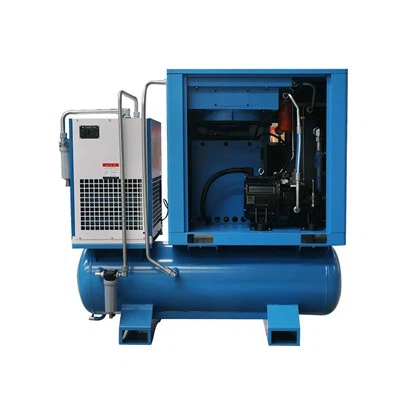
Determining whether your integrated air compressor for laser cutting needs to be replaced is a crucial decision that can significantly impact the efficiency and quality of your laser cutting operations. As a trusted supplier of integrated air compressors for laser cutting, I understand the importance of making informed choices. In this blog post, I'll share some key indicators that can help you decide if it's time to replace your compressor.
1. Decreased Air Pressure and Flow
One of the most obvious signs that your integrated air compressor may need replacement is a noticeable decrease in air pressure and flow. Laser cutting machines rely on a consistent supply of compressed air at the right pressure to ensure clean and precise cuts. If you start to experience issues such as rough edges, incomplete cuts, or burning on the material, it could be due to insufficient air pressure.
You can measure the air pressure at the outlet of the compressor using a pressure gauge. Compare the readings with the recommended pressure settings for your laser cutting machine. If the pressure is consistently lower than the required level, even after adjusting the compressor settings, it may be a sign of internal wear and tear or a failing component.
Similarly, a reduced air flow can also affect the performance of your laser cutting machine. You may notice that the air jet is weaker than usual, which can lead to poor cut quality. A decrease in air flow can be caused by clogged filters, leaks in the air lines, or a worn-out compressor pump.
2. Excessive Noise and Vibration
Integrated air compressors are designed to operate quietly and smoothly. However, over time, normal wear and tear can cause the compressor to become noisy and vibrate excessively. Unusual noises such as rattling, knocking, or screeching can indicate a problem with the compressor's internal components, such as the bearings, pistons, or valves.
Excessive vibration can also be a sign of a misaligned or unbalanced compressor. This can not only cause damage to the compressor itself but also to other components in the laser cutting system. If you notice an increase in noise or vibration levels, it's important to have the compressor inspected by a qualified technician.
3. Frequent Breakdowns and Repairs
If your integrated air compressor is constantly breaking down or requiring frequent repairs, it may be more cost-effective to replace it rather than continuing to invest in repairs. Each time the compressor breaks down, it not only disrupts your production schedule but also incurs additional costs for parts and labor.
Keep track of the frequency and cost of repairs over a period of time. If the total cost of repairs is approaching or exceeding the cost of a new compressor, it's a clear indication that it's time for a replacement.
4. High Energy Consumption
As air compressors age, they tend to become less energy-efficient. This means that they consume more electricity to produce the same amount of compressed air. If you notice a significant increase in your energy bills, it could be due to an inefficient compressor.
Modern integrated air compressors are designed with advanced technologies to improve energy efficiency. By upgrading to a new compressor, you can not only reduce your energy consumption but also save money in the long run.
5. Outdated Technology
The technology used in integrated air compressors for laser cutting is constantly evolving. Newer models offer improved performance, reliability, and energy efficiency compared to older models. If your compressor is several years old, it may be using outdated technology that is no longer able to meet the demands of your laser cutting operations.
For example, some of the latest screw air compressors for laser cutting feature variable speed drives (VSD), which allow the compressor to adjust its speed according to the actual air demand. This results in significant energy savings and a longer lifespan for the compressor.
If you're looking for a more efficient and reliable air compressor for your laser cutting machine, you may want to consider upgrading to a newer model. Check out our Screw Air Compressorfor Laser Cutting and Box-type Screw Air Compressor for more information.
6. Inability to Meet Increased Production Demands
As your business grows, you may need to increase the production capacity of your laser cutting operations. If your current air compressor is unable to provide enough compressed air to meet the increased demand, it may be time to replace it with a larger or more powerful model.
For example, if you're planning to upgrade your laser cutting machine to a higher wattage, you'll need a compressor that can deliver the required air pressure and flow. Our 22kw Laser Cutting Screw Compressor Suitable For 6000 Watt Laser is designed to meet the high-performance requirements of modern laser cutting machines.
Conclusion
Determining whether your integrated air compressor for laser cutting needs to be replaced requires careful consideration of several factors. By paying attention to the signs of decreased air pressure and flow, excessive noise and vibration, frequent breakdowns and repairs, high energy consumption, outdated technology, and inability to meet increased production demands, you can make an informed decision.
If you're unsure whether your compressor needs to be replaced, or if you're looking for a new air compressor for your laser cutting machine, don't hesitate to contact us. Our team of experts can provide you with professional advice and help you choose the right compressor for your specific needs. We're committed to providing high-quality products and excellent customer service to ensure the success of your laser cutting operations.

References
- Compressed Air and Gas Institute (CAGI). (2023). Air Compressor Handbook.
- Laser Institute of America (LIA). (2023). Laser Cutting Technology Guide.
- International Organization for Standardization (ISO). (2023). ISO 8573-1: Compressed air - Part 1: Contaminants and purity classes.