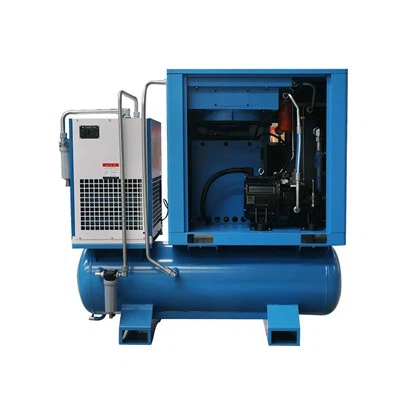
When it comes to the operation of a BOX - TYPE Laser Cutting Air Compressor, environmental factors play a crucial role. As a supplier of BOX - TYPE Laser Cutting Air Compressors, I understand the significance of ensuring that these machines are used under appropriate environmental conditions to guarantee optimal performance and longevity.
Temperature Requirements
Temperature is one of the most critical environmental factors that can affect the operation of a BOX - TYPE Laser Cutting Air Compressor. Generally, these compressors are designed to operate within a specific temperature range. Most BOX - TYPE Laser Cutting Air Compressors are recommended to be used in an environment where the ambient temperature is between 0°C and 40°C.
If the temperature is too low, the lubricating oil in the compressor may become too viscous. This can lead to increased friction within the compressor's moving parts, causing excessive wear and tear. In extreme cases, it may even prevent the compressor from starting up properly. On the other hand, if the temperature is too high, the compressor may overheat. Overheating can cause damage to the compressor's motor, seals, and other components. It can also reduce the efficiency of the compressor, leading to higher energy consumption and lower performance.
To maintain the appropriate temperature, it is essential to install the compressor in a well - ventilated area. Avoid placing the compressor in direct sunlight or near heat sources such as furnaces or radiators. If the ambient temperature is outside the recommended range, additional cooling or heating equipment may be required. For example, in hot environments, installing an air - conditioning unit or a ventilation fan can help keep the compressor cool. In cold environments, using a heater to warm the compressor room can prevent the lubricating oil from thickening.
Humidity Considerations
Humidity is another important environmental factor. High humidity can cause corrosion and rusting of the compressor's metal parts. Moisture in the air can condense inside the compressor, especially in the air tanks and pipes. This can lead to the formation of rust, which can damage the internal components of the compressor and reduce its lifespan.
To prevent the negative effects of high humidity, it is recommended to keep the relative humidity in the compressor room below 70%. Dehumidifiers can be used in areas with high humidity to reduce the moisture content in the air. Additionally, regular maintenance, such as checking for signs of rust and corrosion and applying anti - rust coatings, can help protect the compressor from humidity - related damage.
On the contrary, extremely low humidity can also cause problems. In very dry conditions, static electricity can build up, which may pose a risk of electrical shock or damage to the compressor's electronic components. To mitigate this risk, maintaining a moderate level of humidity in the compressor room is advisable.
Air Quality
The quality of the air that the compressor takes in is also vital. The air should be clean and free from dust, dirt, and other contaminants. Dust and dirt can clog the air filters of the compressor, reducing the airflow and increasing the load on the compressor. This can lead to decreased efficiency and potential damage to the compressor.


It is recommended to install the compressor in an area with good air quality. If the surrounding environment is dusty, such as in a construction site or a manufacturing plant, additional air filtration systems can be installed. These systems can help remove dust and other particles from the air before it enters the compressor. Regularly replacing the air filters is also crucial to ensure the proper functioning of the compressor.
In addition to dust, the air should also be free from chemical pollutants. Chemicals such as solvents, acids, and alkalis can corrode the compressor's components and cause damage. If the compressor is used in an environment where chemical pollutants are present, appropriate ventilation and air purification systems should be installed to remove these pollutants from the air.
Ventilation Requirements
Proper ventilation is essential for the safe and efficient operation of a BOX - TYPE Laser Cutting Air Compressor. Ventilation helps to remove heat, moisture, and any potentially harmful gases or fumes generated during the operation of the compressor.
The compressor room should have adequate ventilation openings to allow fresh air to enter and hot air to exit. The size and number of ventilation openings depend on the size and power of the compressor. As a general rule, the ventilation rate should be sufficient to ensure that the air in the compressor room is completely replaced at least every 5 - 10 minutes.
In addition to natural ventilation, mechanical ventilation systems such as exhaust fans can be used to enhance the ventilation effect. These fans can be installed on the walls or ceilings of the compressor room to expel hot air and bring in fresh air.
Noise and Vibration
BOX - TYPE Laser Cutting Air Compressors can generate significant noise and vibration during operation. Excessive noise can be a nuisance to the operators and may also violate local noise regulations. Vibration can cause damage to the compressor itself and other nearby equipment.
To reduce noise, the compressor can be installed on a vibration - absorbing base. This can help dampen the vibrations and reduce the noise level. Additionally, sound - insulating materials can be used to line the walls and ceilings of the compressor room. These materials can absorb sound waves and reduce the noise transmission.
Regarding vibration, regular maintenance to check the alignment of the compressor's components and the tightness of the bolts is necessary. Loose bolts or misaligned components can increase vibration. If the vibration is severe, professional technicians should be called in to diagnose and fix the problem.
Our Product Range
As a supplier of BOX - TYPE Laser Cutting Air Compressors, we also offer a variety of other high - quality air compressors to meet different customer needs. For example, we have the 22kw High Pressure Screw Air Compressor With Air Tank, which is suitable for applications that require high - pressure air. Our Skid - mounted Screw Air Compressor is designed for easy installation and mobility, making it ideal for construction sites and other outdoor applications. And our High - efficiency Screw Air Compressor offers excellent energy efficiency, helping customers save on energy costs.
Conclusion
In conclusion, there are indeed several environmental requirements for using a BOX - TYPE Laser Cutting Air Compressor. Temperature, humidity, air quality, ventilation, noise, and vibration all need to be carefully considered to ensure the proper operation and longevity of the compressor. By following these environmental requirements and conducting regular maintenance, customers can maximize the performance of their compressors and minimize the risk of breakdowns.
If you are interested in our BOX - TYPE Laser Cutting Air Compressors or any of our other products, please feel free to contact us for more information and to discuss your specific requirements. We are committed to providing high - quality products and excellent customer service.
References
- Compressor Handbook, Third Edition, by Klaus Brun and Eckhard Strauß
- Air Compressor Systems: Operation, Maintenance, and Troubleshooting, by Robert W. Reilley