

As a supplier of PM Laser Cutting Air Compressors, I've received numerous inquiries about how these compressors perform under high - temperature conditions. In this blog, I'll delve into the performance of PM Laser Cutting Air Compressors at high temperatures, discussing the challenges they face, the design features that help them overcome these challenges, and the implications for laser - cutting operations.
Challenges of High - Temperature Operation
High temperatures pose several significant challenges to air compressors in general, and PM Laser Cutting Air Compressors are no exception. One of the primary issues is the effect on the compressor's lubrication system. Lubricants are crucial for reducing friction between moving parts, dissipating heat, and sealing the compression chamber. At high temperatures, the viscosity of the lubricant decreases, which can lead to insufficient lubrication. This, in turn, increases wear and tear on the compressor components such as the rotors, bearings, and pistons. Excessive wear can not only reduce the efficiency of the compressor but also lead to premature failure, resulting in costly repairs and downtime for laser - cutting operations.
Another challenge is related to the cooling system. Air compressors generate a substantial amount of heat during operation, and efficient cooling is essential to maintain optimal performance. High ambient temperatures make it more difficult for the cooling system to dissipate heat effectively. For example, if the compressor uses an air - cooled system, the hot ambient air will have a reduced capacity to absorb heat from the compressor. This can cause the compressor to overheat, triggering thermal protection mechanisms that may shut down the compressor to prevent damage.
The electrical components of the compressor are also affected by high temperatures. Electrical resistance increases with temperature, which can lead to higher power consumption and potential overheating of the motor. Additionally, high temperatures can degrade the insulation materials of the electrical wiring, increasing the risk of short - circuits and electrical failures.
Design Features to Overcome High - Temperature Challenges
To address these challenges, PM Laser Cutting Air Compressors are equipped with several design features. Firstly, advanced lubrication systems are used. These compressors often use high - quality synthetic lubricants that have better thermal stability compared to conventional mineral oils. Synthetic lubricants can maintain their viscosity over a wider temperature range, ensuring proper lubrication even at high temperatures. Some compressors also have oil coolers that help regulate the temperature of the lubricant, preventing it from overheating and maintaining its effectiveness.
In terms of the cooling system, many PM Laser Cutting Air Compressors are designed with enhanced cooling capabilities. For air - cooled models, larger and more efficient cooling fans are used to increase the airflow over the compressor components. Some compressors also feature heat exchangers with a larger surface area, which improves the heat transfer rate and allows for more effective cooling. Water - cooled models are also available, which can provide even more efficient cooling, especially in high - temperature environments. Water has a higher heat capacity than air, allowing it to absorb more heat from the compressor.

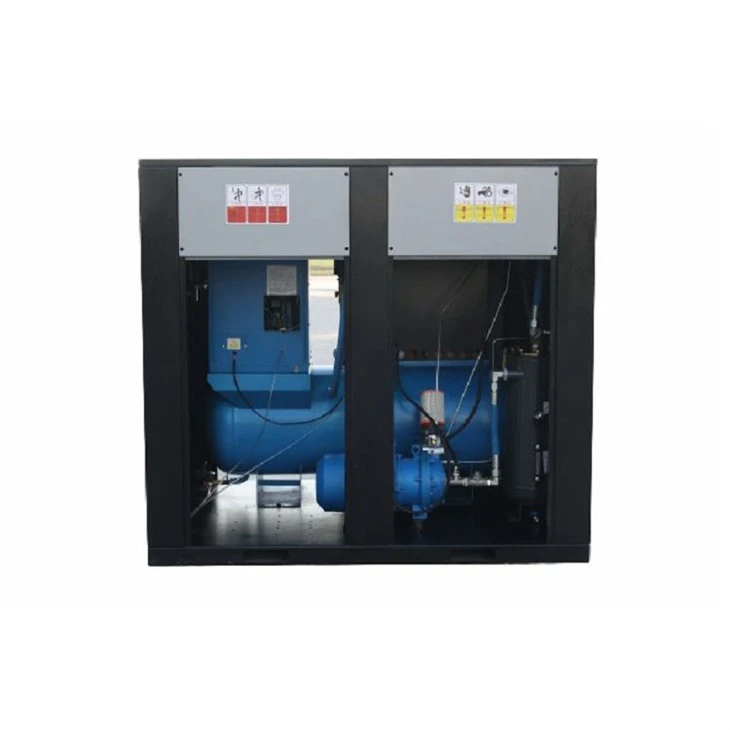
The electrical components of PM Laser Cutting Air Compressors are designed to withstand high temperatures. They are often made with high - temperature - resistant insulation materials and are sized to handle the increased electrical resistance caused by high temperatures. Additionally, thermal sensors are installed to monitor the temperature of the motor and other electrical components. If the temperature exceeds a safe limit, the compressor can be automatically shut down to prevent damage.
Performance Implications for Laser - Cutting Operations
The performance of PM Laser Cutting Air Compressors at high temperatures has direct implications for laser - cutting operations. When the compressor operates efficiently, it can provide a stable supply of compressed air, which is essential for the laser - cutting process. Compressed air is used to assist in the cutting process by blowing away the molten metal and debris, ensuring a clean and precise cut. If the compressor experiences performance issues due to high temperatures, such as reduced airflow or pressure fluctuations, it can affect the quality of the laser - cut parts.
For example, insufficient airflow can result in incomplete removal of molten metal, leading to rough edges and dross on the cut parts. Pressure fluctuations can cause variations in the cutting speed and quality, resulting in inconsistent cuts. In addition, compressor downtime due to overheating can disrupt the production schedule, leading to delays and increased costs.
Case Studies
Let's take a look at some real - world examples of how PM Laser Cutting Air Compressors perform at high temperatures. In a manufacturing facility located in a hot and arid region, a company was using a PM Laser Cutting Air Compressor for their laser - cutting operations. During the summer months, the ambient temperature often reached over 40°C. Initially, they faced some issues with the compressor overheating and reduced performance. However, after upgrading to a model with a more efficient cooling system and synthetic lubricant, the compressor was able to operate smoothly even at high temperatures. The company reported a significant improvement in the quality of their laser - cut parts and a reduction in production downtime.
Another case involved a laser - cutting workshop that was experiencing frequent compressor failures due to high temperatures. After replacing their old compressor with a 15kw Screw Air Compressor For Laser Cutting, which is specifically designed for high - temperature environments, they noticed a dramatic change. The new compressor had a larger cooling fan and a more advanced lubrication system, which allowed it to maintain stable performance even during peak summer days.
Conclusion
In conclusion, while high temperatures pose significant challenges to PM Laser Cutting Air Compressors, these compressors are designed with features to overcome these challenges. Advanced lubrication systems, enhanced cooling capabilities, and high - temperature - resistant electrical components ensure that the compressors can operate efficiently even in hot environments. The performance of these compressors at high temperatures has a direct impact on the quality and efficiency of laser - cutting operations.
If you're in the market for a reliable PM Laser Cutting Air Compressor, especially for high - temperature environments, we have a range of products to meet your needs. Our Skid - mounted Screw Air Compressor for Laser and Screw Air Compressorfor Laser Cutting are designed to provide optimal performance in various conditions. We encourage you to contact us for more information and to discuss your specific requirements. Our team of experts is ready to assist you in selecting the right compressor for your laser - cutting operations.
References
- Compressor Handbook: Principles and Practice, by Heinz P. Bloch and Allan R. Budris
- Thermal Management in Air Compressors, Journal of Compressor Technology
- Impact of High Temperatures on Industrial Equipment, Industrial Engineering Research Journal


